Showing posts with label Margo Lamont. Show all posts

Tuesday, 18 June 2019

*Every*thing is a writing prompt

Absolutely anything can work as a writing prompt.

Grind Writer, Malcolm van Delst
(DoThe Wrong Thing) proved this at our last meeting. 
In a box of writing prompts she found an old bottle of Beaver® brand sweet hot mustard full of sand. It was a jury-rigged thing I had made to weigh down the bottle which in turn held a sign at the writing table, and it got left in the prompts box.

Intrigued by this anomalous 3D object, she chose it as a writing prompt. And look what she created out of that! It goes to show that when you allow yourself to just write, when you let your mind free-wheel and say its piece through your pen, you always come up with creative stuff.

If you want to hear this piece below in her voice, watch this video of Malcolm reading at her Do The Wrong Thing book launch first.

____________________

Cat Litter in a Beaver Brand Sweet Hot Mustard/Moutard Sucree Forte Bottle, Gold Medal Winner, 360 ml
A free-wheeling free-write by Malcolm van Delst
All right, it’s poem time! Poem, pome, mome. Mome-me. I can bring my mother into anything.
All right, it’s poem time! Let’s get rid of her—the Mother, I mean—or, I don’t mean—literally, I mean—Jesus Christ, can you not bring her into something just this once?
She didn’t like mustard or cats. She holds more than 360 ml of anything. She IS red and yellow—oh, damn, look—I said I wasn’t going to bring her into this and here she is: The Mother. All Hail the Red and Yellow Mother!
Gold. Medal. Winner. Every mother is a Gold Medal Winner, it’s baked into the role. To every child, their mother is the absolute best, the center, the beginning the life force the giver the taker the One and Only.
Yeah, it’s happening: Mom took this over. Whatever, Ma, you can have me. You got me. You ol’ goat.

                                                     
There. I insulted her and now, a short reprieve, reader, which I’ve indicated with a double space.
Gold. Medal. Winner. Ma. Mom. Monster. That movie starring Charlize Theron. There’s a mother if ever there was one! “Mother.” In the sense of “heavy,” “large,” “deserving of respect,” even if not love or admiration. Respect for the audacity and evil. What kind of mother makes a mother like Elaine W—I’ll have to look up her name afterwards, the real woman Charlize’s character is based on in the movie, Monster?
There are ways to win medals—scratch that—there are ways to win fame that aren’t based on being liked. Take this cat litter in the mustard bottle. Weird, singular—what if the person who made this bottle left the remaining mustard in before pouring in the litter? That would add to the je ne sais quoi.
What if a monster mother was thrown into this bottle, where she couldn’t mother monster, monster mother? Bottled. Jailed—that would be it: what we do to our criminals.
I like to think of a tiny monster mother bottled in the Beaver Brand Sweet Hot Mustard bottle with the “Gold Medal Winner” sash on the bottom. I bet the monster mother would like that, too. The sash, I mean, she wouldn’t like being bottled, though really, that she is: bottled up—all that hate, anger and anguish with nowhere to go, exploding. Like yellow mustard in a bottle on a hot window ledge in the sun.
____________________

©2019 Malcolm van Delst


Saturday, 30 June 2018

Indigenous Style Guide: Writing with Respect

Elements of Indigenous Style: A Guide for Writing By 
and About Indigenous Peoples by Gregory Younging PhD 
Brush Education Inc., Edmonton AB: Feb. 15 2018
PB, 168 pp

ISBN Print:  9781550597165
ISBN eBook:  9781550597196 


This book is a must-read for every Canadian, writer or not. Gregory Youngling has done everyone a service writing and compiling this book.
It is more than just a dry style guide. (A usage geek, I actually don’t find style guides dry, but I know many people do). 


When Younging explains what the offense is in various word or phrases, you learn what the pain connected with it is, what the sorrow, the trauma, and the anger are—what, in some cases, the cultural or physical violence has been and, yes, the attempted genocide cultural or otherwise. 
Born in Canada, I initially found  it eally offputting to be considered a 'settler.'  
I’m not, nor were my parents nor any of my ancestors the people who came ashore and laid claim to this land centuries ago. Yet, the occupying force (Government; Crown) that was in place, that ordered my parents to relocate during WW2 to this country where I would later be born—that was the government of a colonial force, no matter how much time has passed. It’s simple. We are. They’re right. 
I have resented that settler label. This book helped me accept and wear it. By default, and not really my fault--you don't get to choose where you drop out--I'm part of settler culture. Unfortunate for me, it completely dispossesses me. (Where is my place in the world? What place can I claim to be from? Nowhere apparently. And that was hard to come to terms with and try to accept.)
Still, as I read this book, my heart opened even more to the suffering of the indigenous peoples (note: ‘indigenous peoples of Canada’: ok. ‘Canada’s indigenous people’: not ok -- that possessiveness again…).  We can’t undo what happened, but we can acknowledge it happened. (What we do about that, how we all handle it together—that’s another matter altogether.)
We need to fix it and make it right. That will never happen 100%: nothing can ever un-do the taking over, all the past pain, hurt and horror—but we can try. 

And one way we can all try is by watching our language. We can make that effort to become aware of how we talk about indigenous people, how we characterize them in language that may be deeply offensive (for very good reasons), and what we do with their stuff, in this case specifically their stories and history.
If you are writing about indigenous peoples or topics, one big takeaway from this book is: consult, consult, consult. 

Take your work to the Elders of the relevant nation and ask them to review what you have written to ensure not only that what you’ve done is accurate, but  especially that it is your story to tell. Because as Younging says in an interview cited below: 
“There are a lot of editorial issues that are particular to writing by and about indigenous peoples. There are a lot of internal protocols and laws around indigenous knowledge and stories that non-indigenous people just don’t know. For example, some traditional stories are sacred, and there’s a training process required before you have the right to tell them. Some have an apprenticeship-like system, where someone has to train under an elder or master storyteller before they’re allowed to tell the stories.” We just need to think about how we would feel if some stranger came along and stole our histories and our stories and told them supposedly on our behalf, when we were perfectly capable of telling them ourselves, and those strangers told them incorrectly, out of context, and broke our sacred laws in the process.
It's all about respect. 
Younging says indigenous people are not saying ‘don’t write about us’ – they are saying, “If you’re going to write about us, make sure you understand these editing issues.”
We have a lot to learn. This book is one step towards starting that process.
……………

Author Gregory Younging
 “is a member of the Opaskwayak Cree Nation in Northern Manitoba. He’s been the managing editor of Theytus Books, the first Aboriginal-owned publishing house in Canada, for over 13 years.  Elements of Indigenous Style evolved from the house style guide Gregory developed at Theytus in order to ensure content was consistent and respectful.” (--Alberta Writers’ Guild).  He’s a professor of indigenous studies at UBC–Okanagan.   
This Quill & Quire Q&A with Greg Younging on editing indigenous works, story ownership, and Canadian publishing is a good introduction. 


©2018 Margo Lamont

Tuesday, 17 January 2017

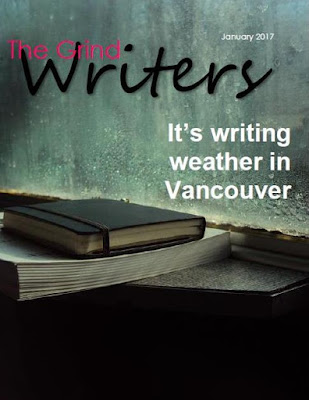
GRIND WRITERS Magazine JAN 2017


 Grind Writers News Jan 2017 

See it on Issuu here.
3 | Things to do at night by yourself
5 |  Lovin' Taylor's "barf" and Lamott's "shitty" first drafts
6 |  Vancouver writing. New West writing.
7 |  Literary Bran: the joys of regularity
8 |  Go Go Go   LITERARY EVENTS
9 |  Crapulous. Fard. Words that sound rude but aren't
11 | The photo writing prompt  JUST DO IT
12-15 | Submit.  (You know you want to)  MASSES OF MARKETS
16 | Local writing workshops of note

Monday, 22 April 2013

Grind News - April 6, 2013

Read the issue on Issuu.com - here.


  • BC writers autonomous fan region
  • LitFest New West - at a river port near you
  • An evening with Ruth Ozeki & Linda Solomon
  • 100 websites you should know and use
  • Write with Geist: workshops
  • Submit.  (You know you want to.)
  • Haiku time: Vancouver’s Cherry Blossom Fest
  • What is Erasure Poetry anyway?
  • Free-write picture prompt: C’mon, just do it!

photo prompt

Free-write for 15 minutes--no stopping.
Send your output for posting here, to grindwriters@gmail.com  

photo Margo Lamont